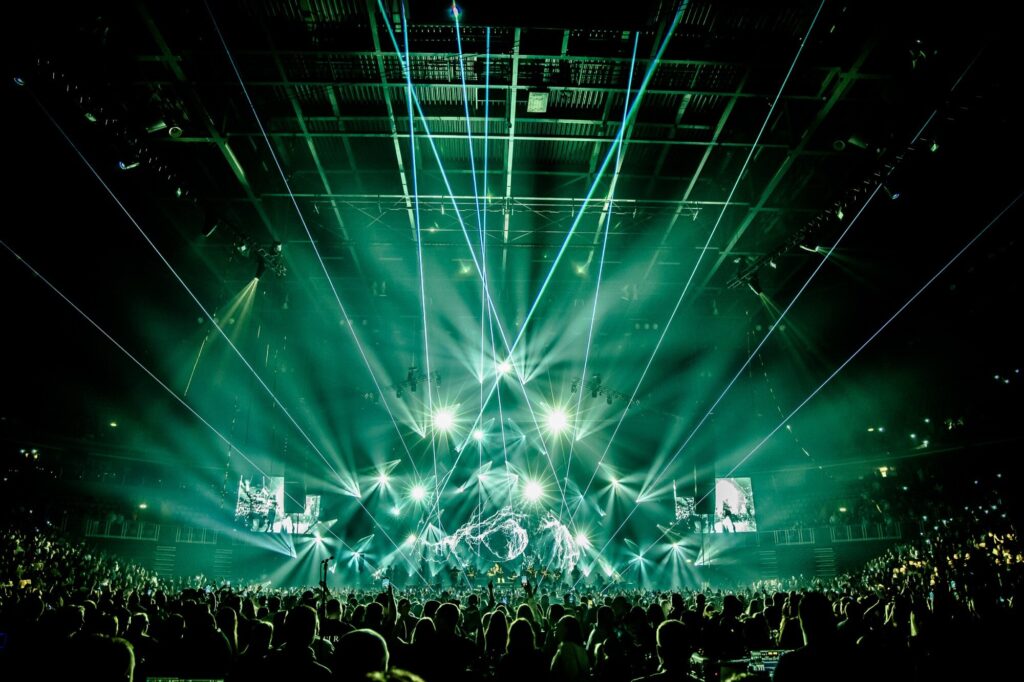
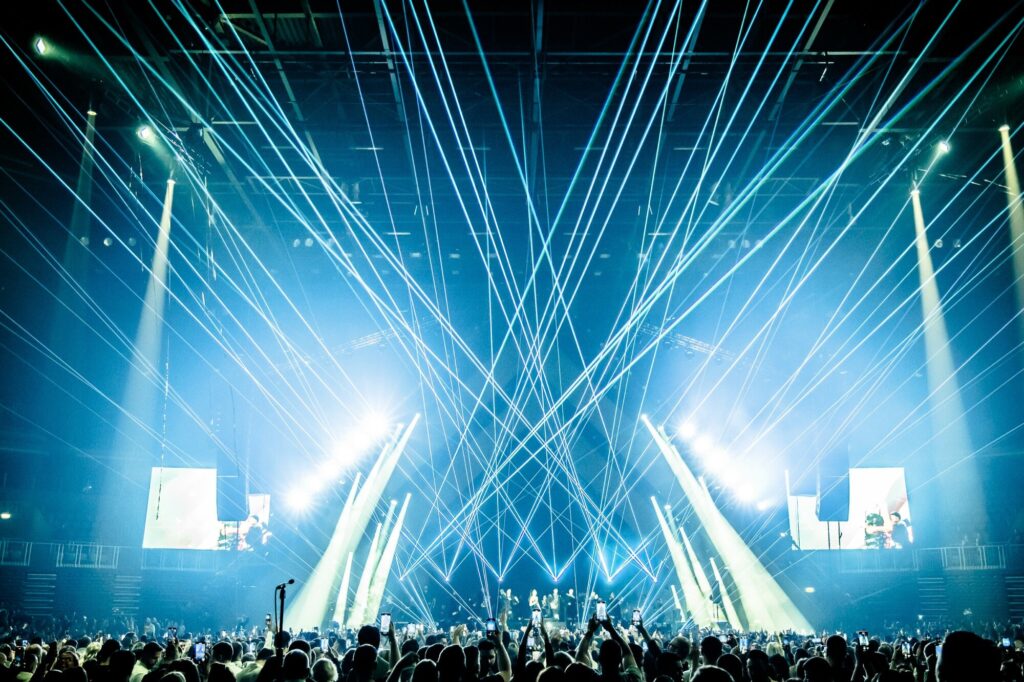
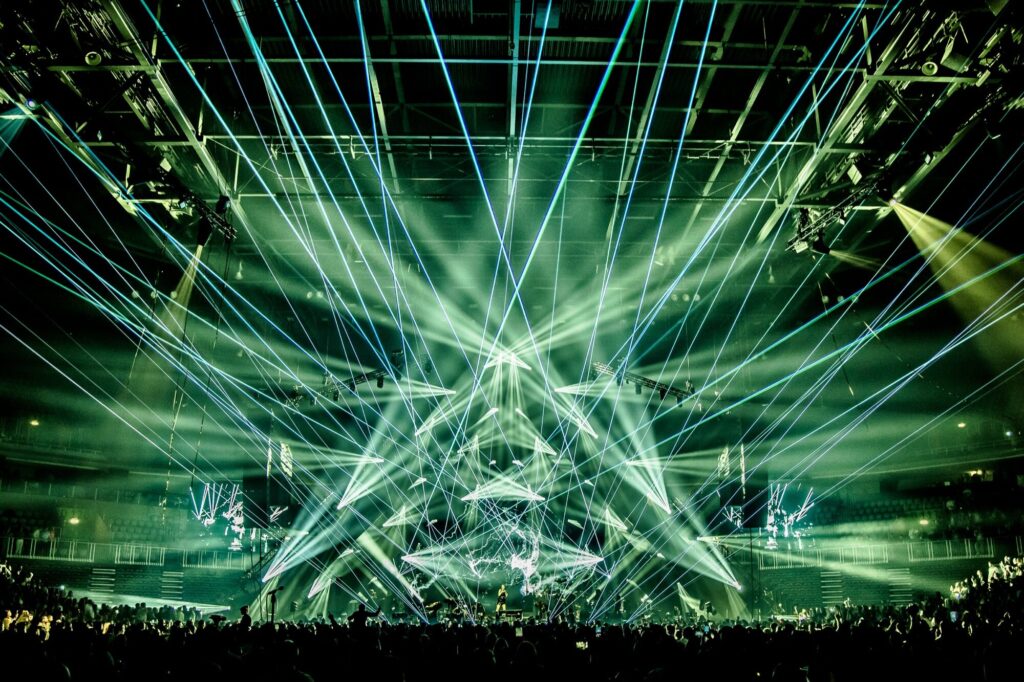
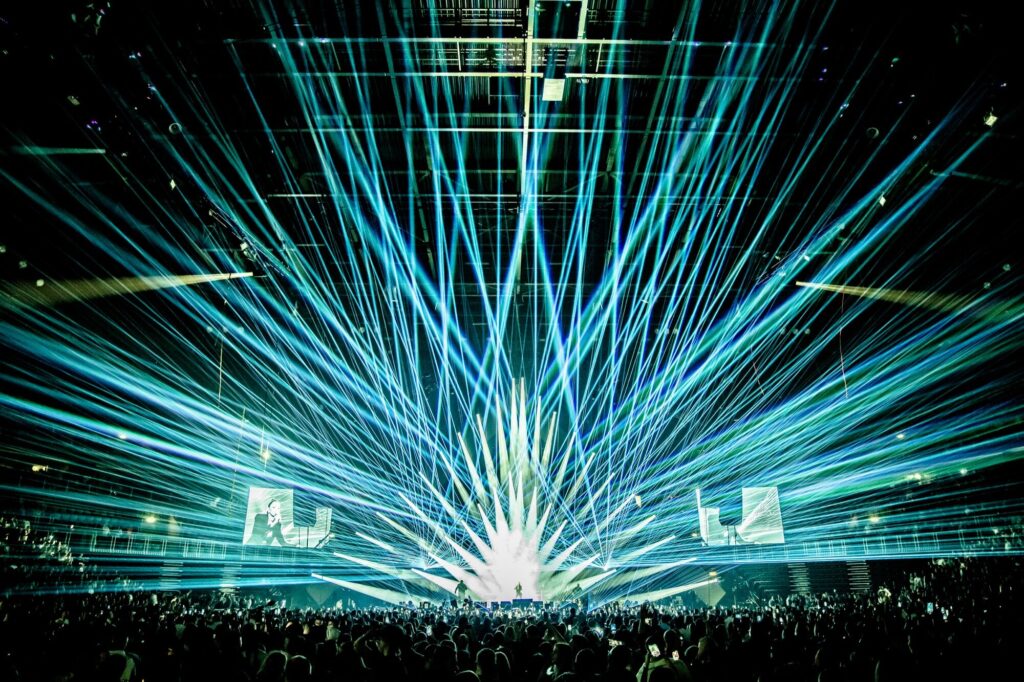
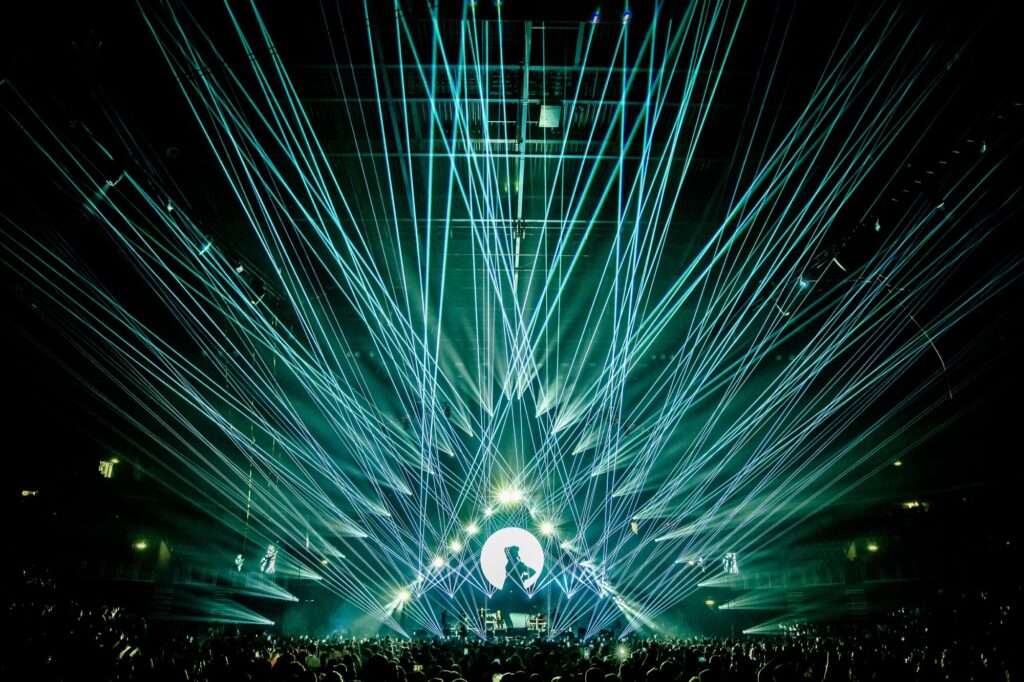
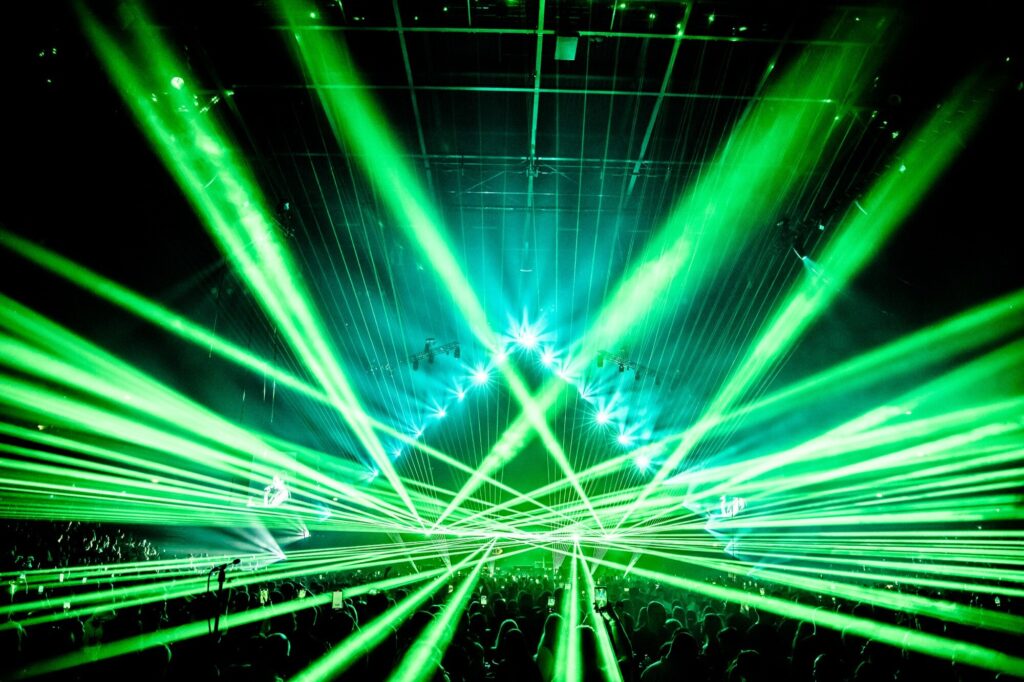
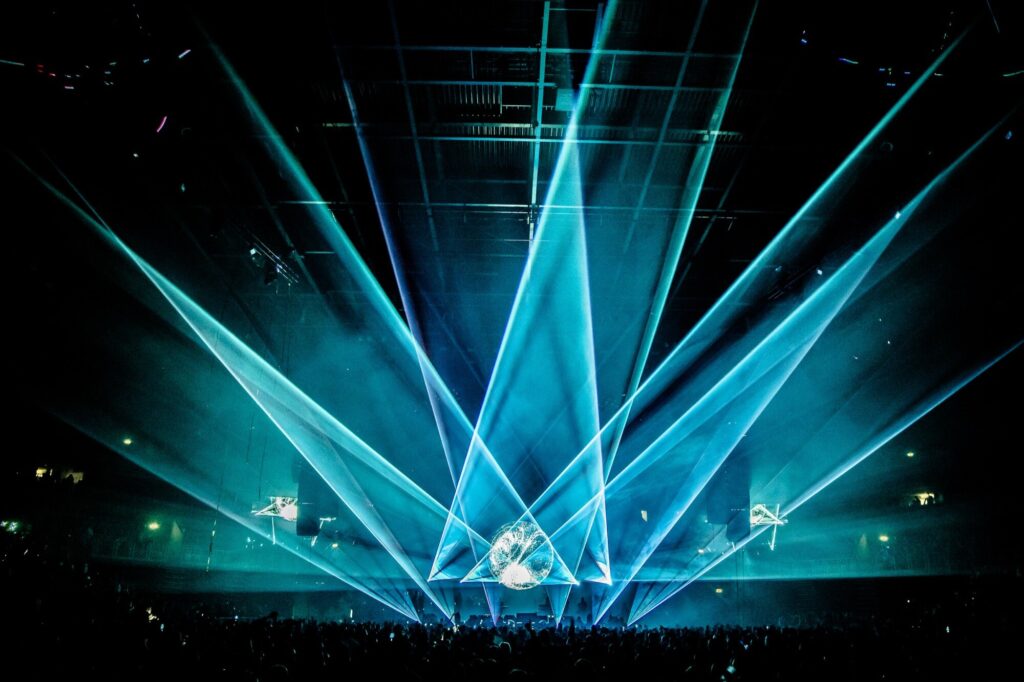
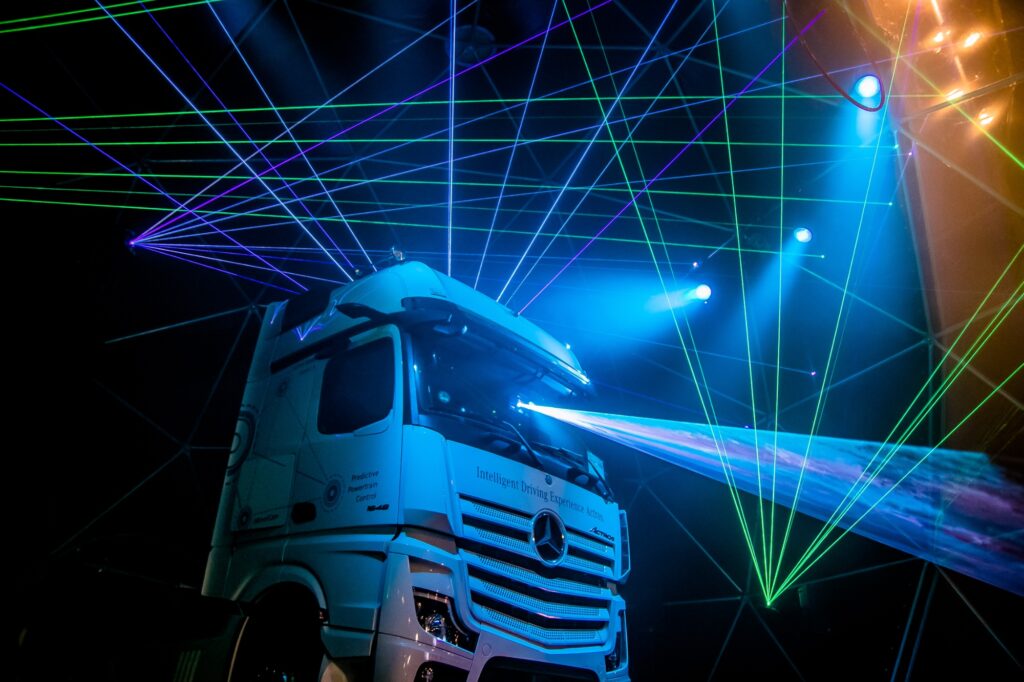
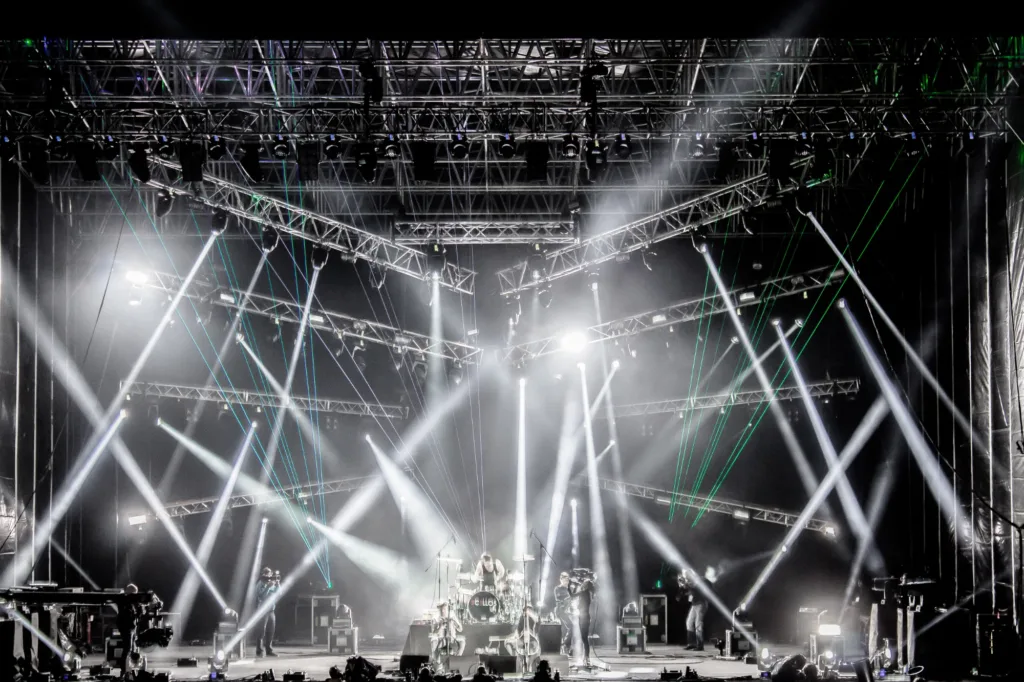
Laser is not magic. It only looks that way.
Everything organisers, creative teams and technical departments want to know before the first drawing. No sales language — just clear answers about creativity, physics, production and safety.
Are laser shows safe for an audience?
Yes — when the show is engineered as a technical system rather than improvised on site. We define safe zones for every venue, verify every beam path and keep the complete system under a trained operator’s control.
Projector power alone does not determine whether an effect is safe. Distance, beam divergence, scan speed, venue geometry and exposure levels in accessible areas all matter.
A good laser show starts with a safety plan, not the Play button.
What does audience scanning actually mean?
Audience scanning means a direct or reflected laser beam enters an area accessible to the audience. It is not simply another visual effect: permitted exposure must be specifically calculated and measured, and the system must remain safe if a scanner fails.
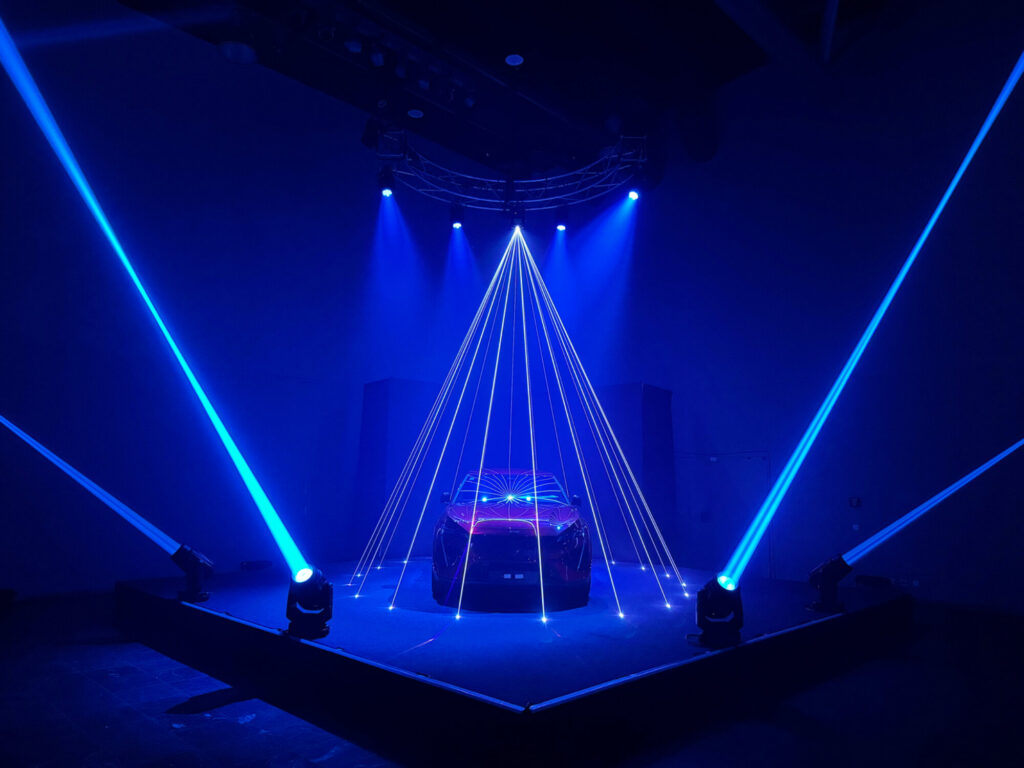
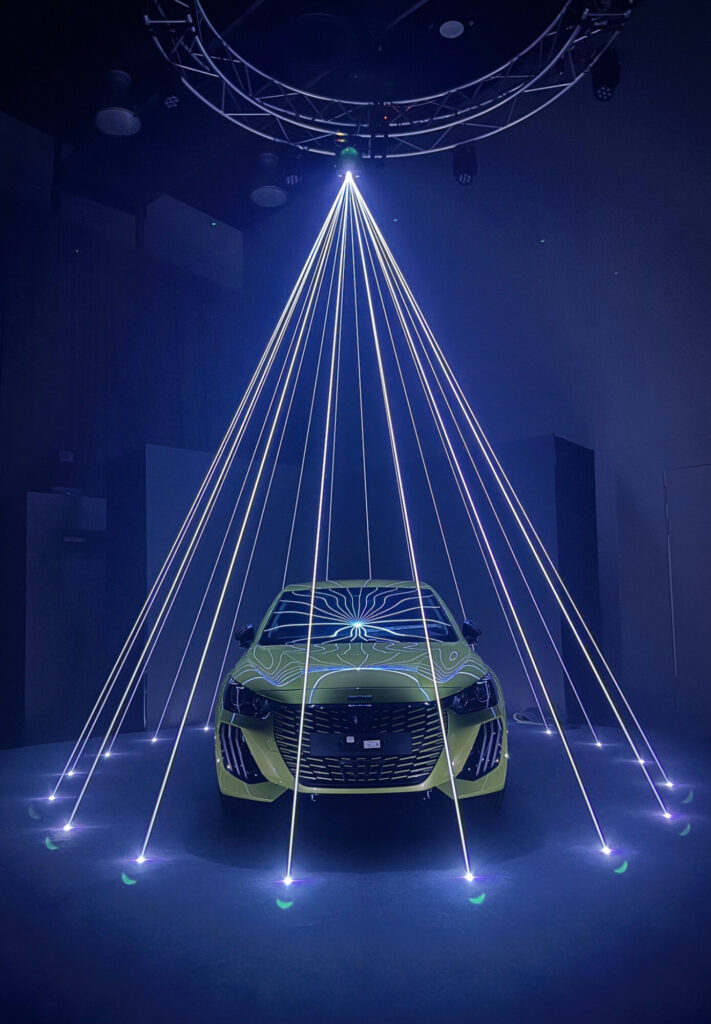
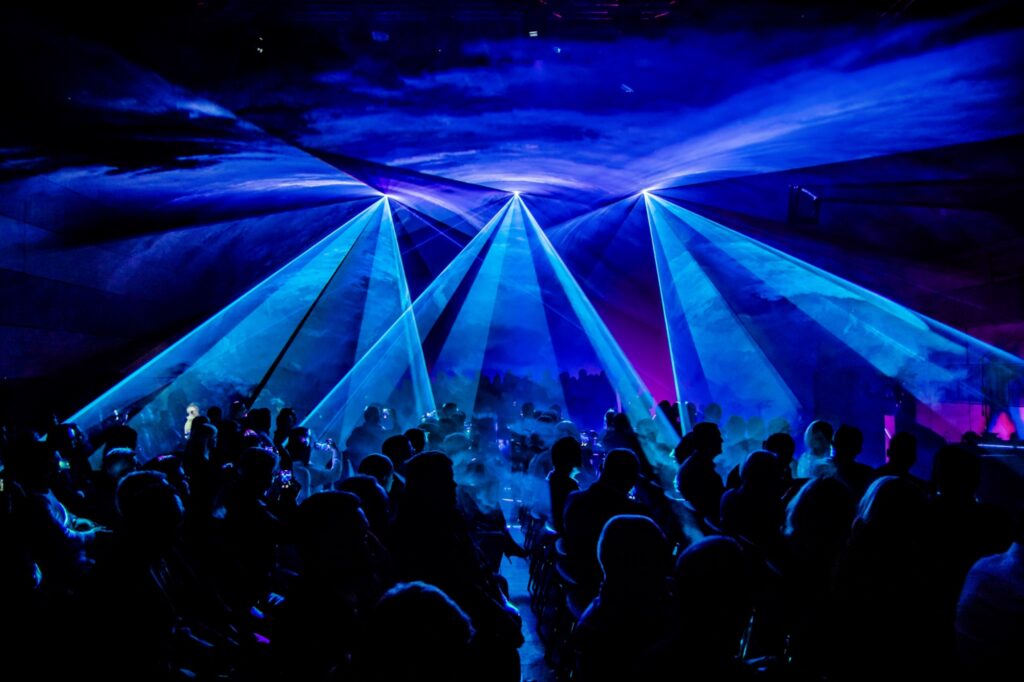
Most productions can achieve a monumental image by keeping powerful beams above the audience. If a concept requires audience scanning, it is assessed separately and never assumed safe simply because a pattern moves quickly.
A beam entering the audience must be measured, documented and technically safeguarded.
How do you decide where beams may travel?
We start with venue plans and sections: rig height, audience positions, performers, cameras and working routes. We then define projection zones and physically constrain the output wherever a beam must not land.
Reflective surfaces, mirrors, glass and metal receive special attention because a reflection can redirect a beam. Final positions are confirmed on site before the show receives a green light.
Every effect has a predefined safe volume in the venue.
What happens if a scanner or computer fails?
A professional system never assumes everything will always work perfectly. We use projector safety functions, physical beam constraints, scan-fail protection where required and an emergency stop that can terminate emission immediately.
Before doors open, the operator completes a final safety check and remains at the controls throughout the show. Safety comes from good design, technical safeguards and a person who knows when to stop the system.
Failure planning is part of show design, not an improvisation after a problem.
What do you need for an initial quote?
To begin, we need the date, location, event type and approximate audience size. If you have a floor plan, stage visual or technical rider, send those too — they help us estimate projector count, rigging and programming scope faster.
You do not need a finished concept. Often it is enough to describe the moment you want: a vehicle reveal, concert finale, artist entrance or a space you want to transform into an installation.
Date + venue + desired moment are enough for the first conversation.
How far in advance should a show be booked?
A few weeks is often enough for a smaller standard beam show. Arenas, tours, custom graphics and productions requiring special approvals need more time — ideally one or two months.
Calling earlier does not make the process more complicated. It gives us room for previsualisation, testing and coordination with lighting, video, rigging and rehearsal schedules.
The larger and more specific the show, the more valuable previsualisation and rehearsal time become.
How long do installation and rehearsal take?
A simpler club or small-venue setup can be installed and checked in a few hours. An arena, complex mirror show or corporate reveal usually needs a full production day and sometimes a separate technical rehearsal.
Cable connection is rarely the time-consuming part. Precise projector alignment, zone verification and testing every sequence in the real venue take the time.
Installation is complete only when the creative image and safety zones are equally precise.
What venue sizes can you cover?
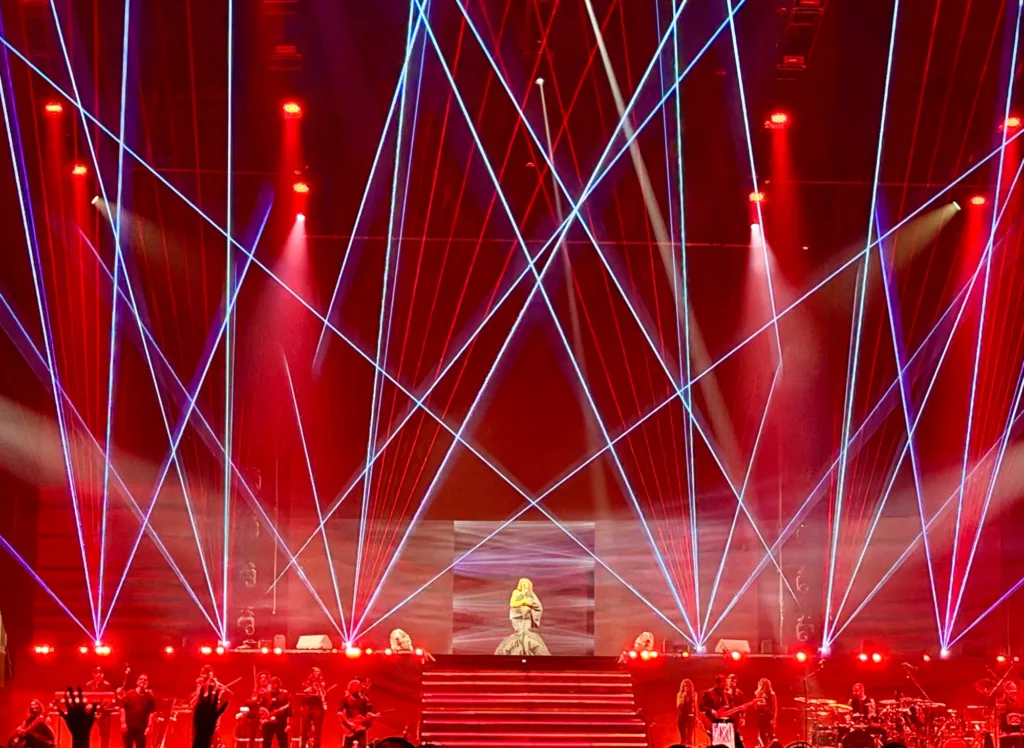
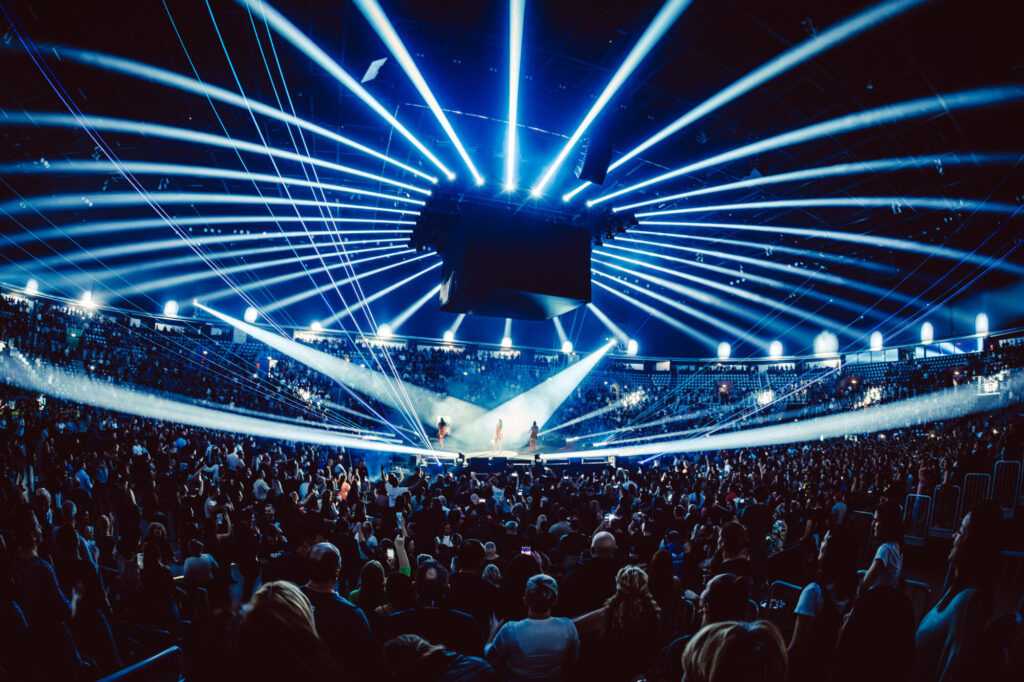
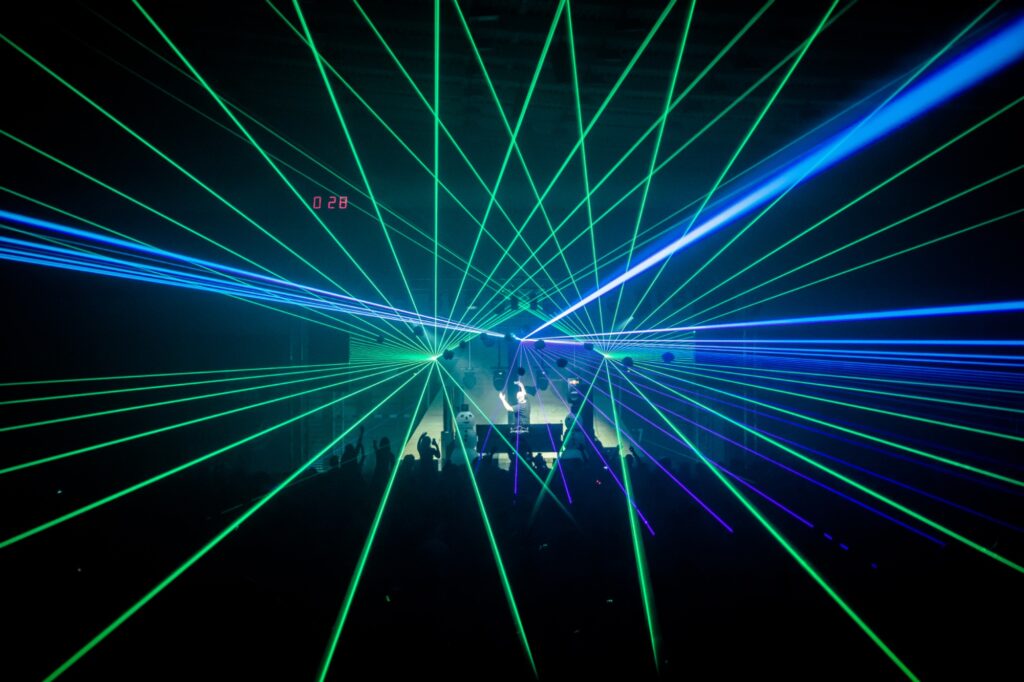
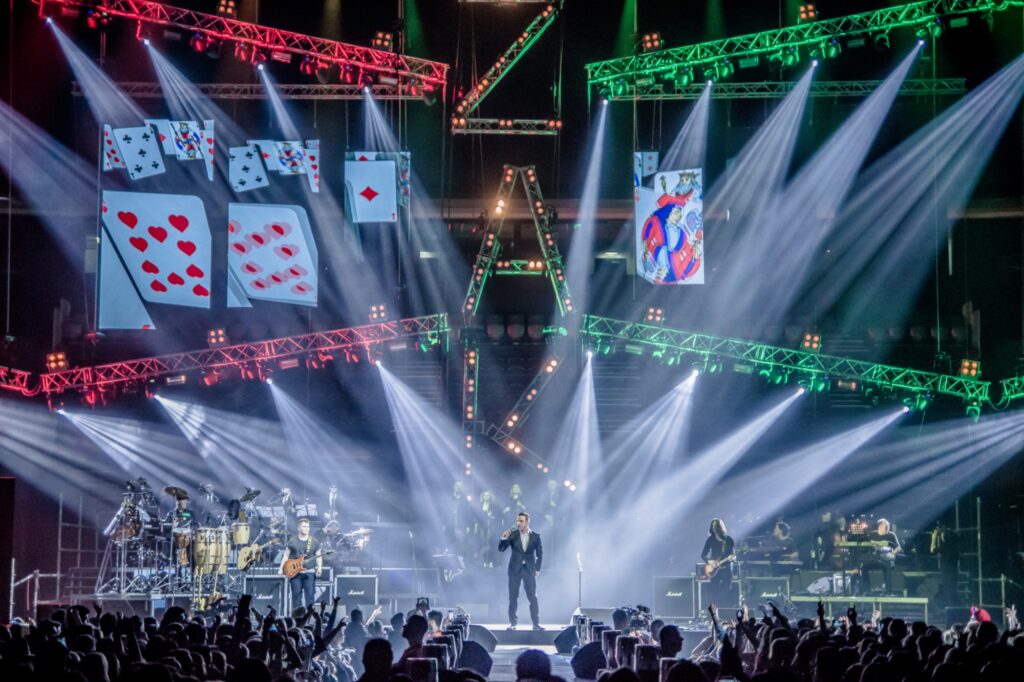
From clubs and hotel ballrooms to arenas, stadiums and large outdoor sites. There is no single “arena laser”: unit count, power, optics and positions are chosen around distances, ambient light and the intended image.
Sometimes several smaller, precisely positioned projectors outperform one extremely powerful unit. System design matters more than a single wattage figure.
We scale the system to the venue, not the venue to one box.
Can you draw our logo with laser?
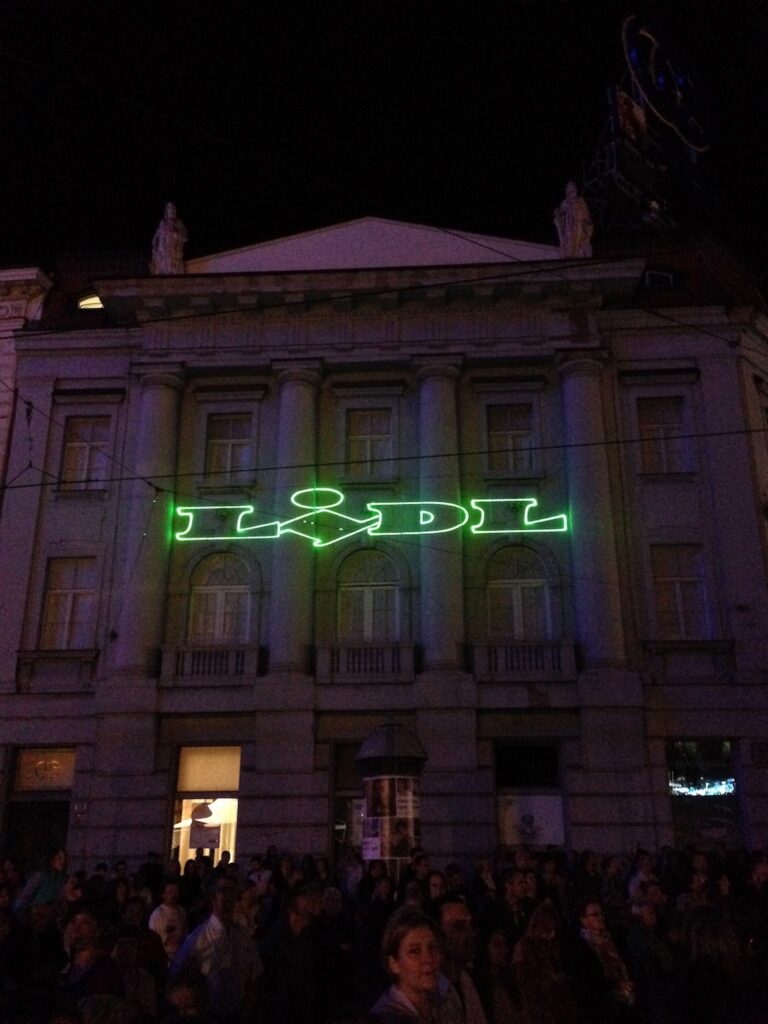
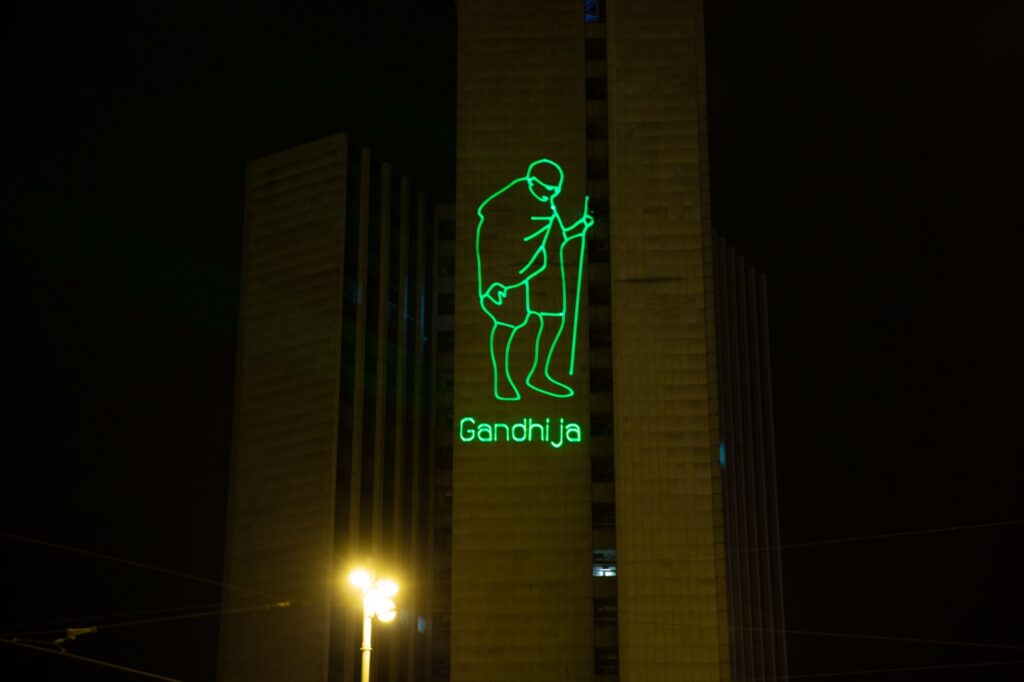
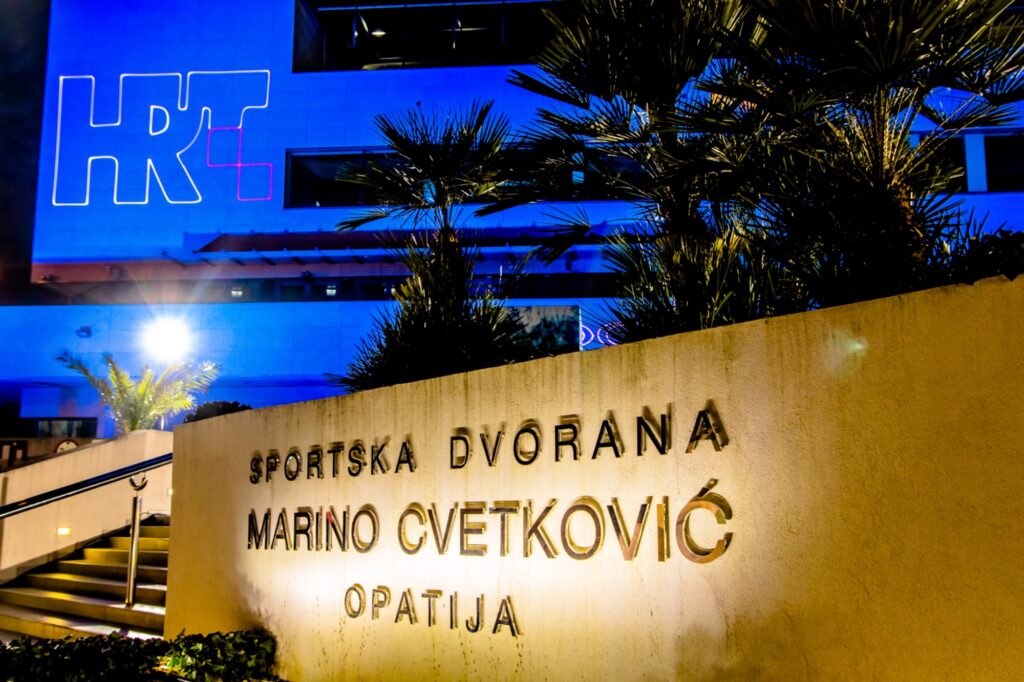
Yes. A vector file — SVG, AI or EPS — is the best starting point. We then adapt the mark for laser drawing: defining stroke order, removing unnecessary detail and tuning scan speed so it remains clean and stable.
Colours can be brought close to the brand identity, but a laser is not a screen and does not reproduce every Pantone tone identically. That pure line of light is precisely what gives the projection its character.
We turn a vector mark into a signature made of light, not merely a projected image.
Can lasers, lighting and video breathe together?
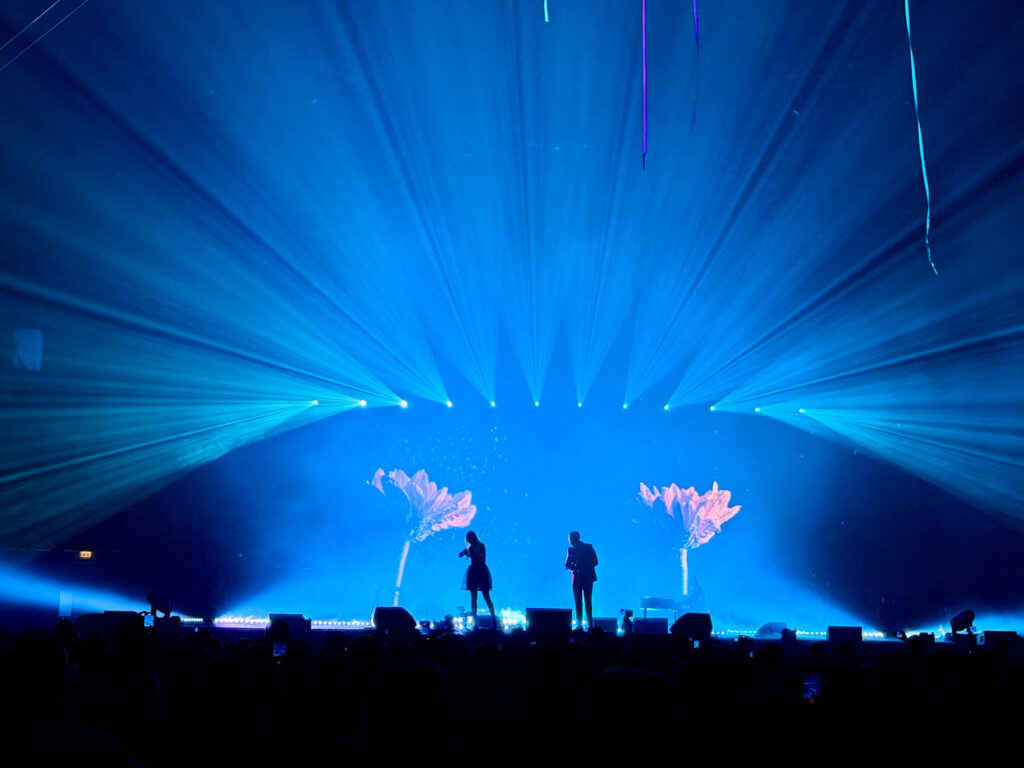
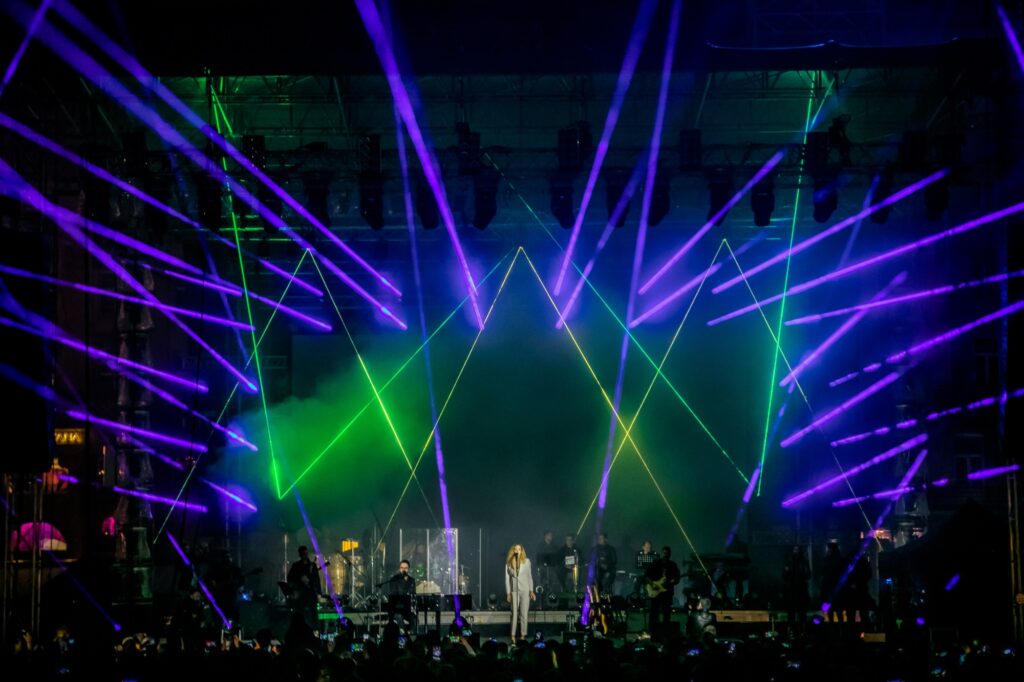
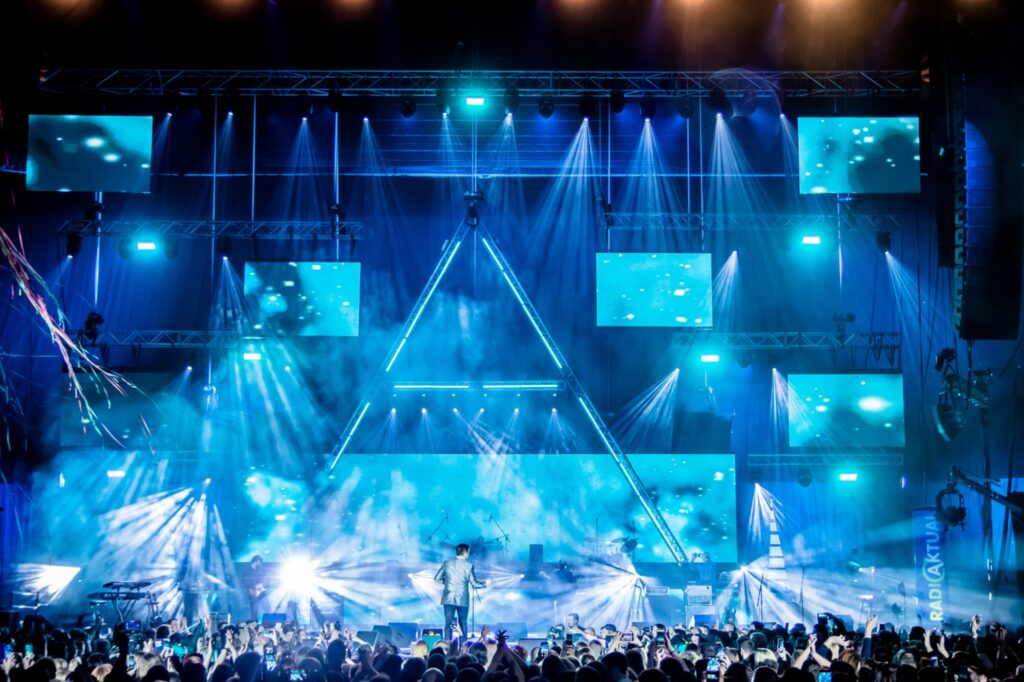
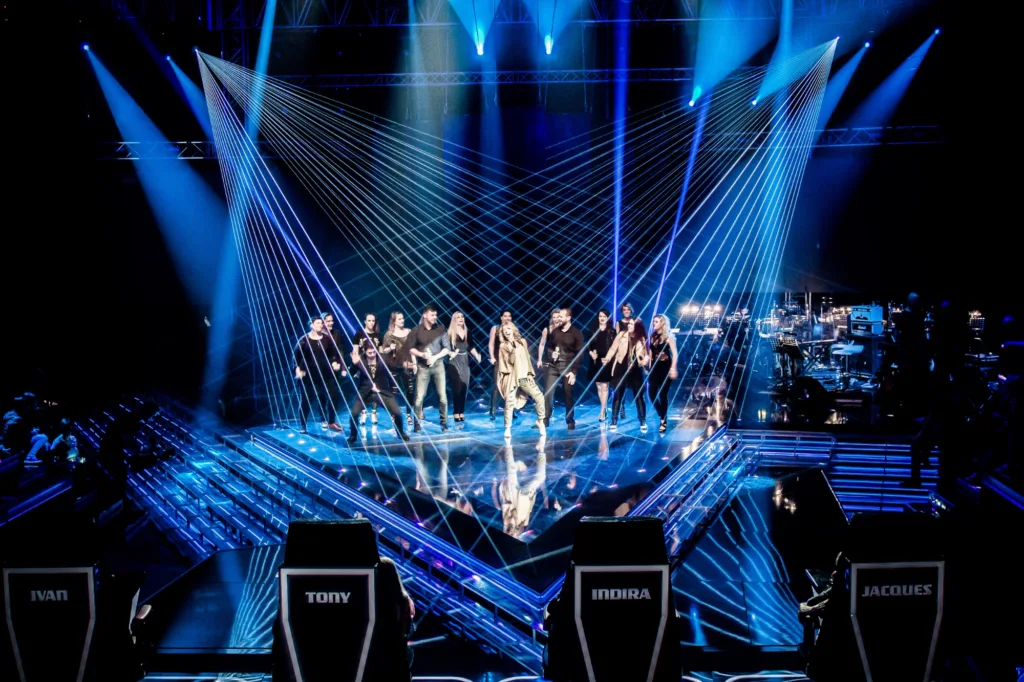
Yes — that is our Fusion Show format. Lasers, lighting, video and stage effects are developed as one composition, with SMPTE timecode keeping every system on the same timeline.
Synchronization is not merely about everything firing at once. Each medium needs to know when to carry the image and when to step back. That keeps the show powerful without becoming visually noisy.
One timecode, one dramaturgy, different media at the right moment.
What can laser graphics be projected onto?
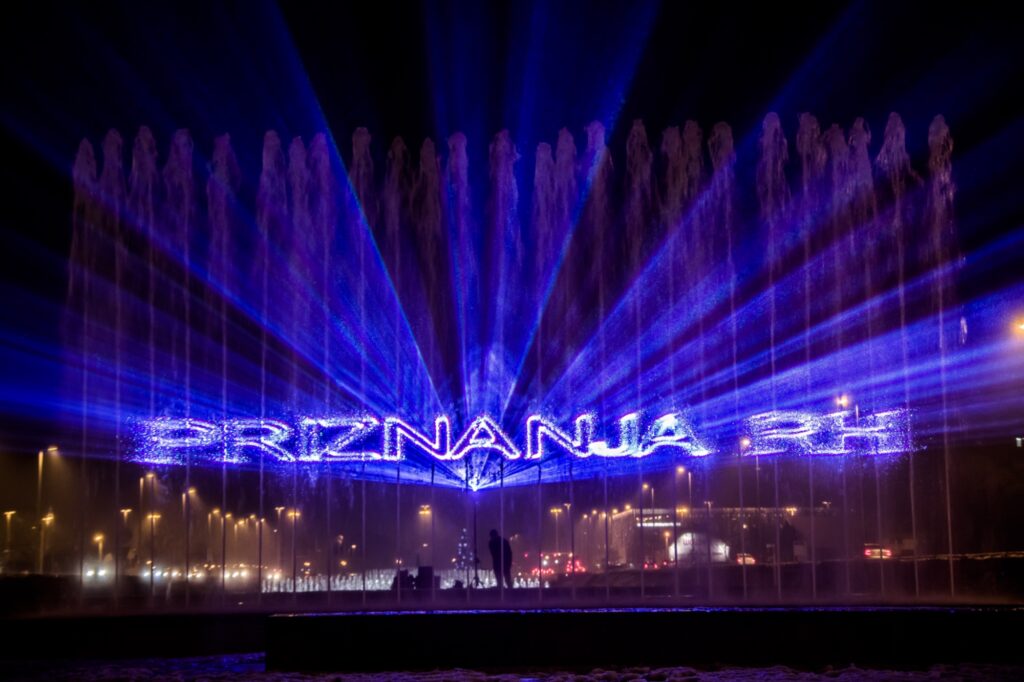
Onto a conventional surface, a fine transparent projection mesh, a water curtain, architecture or purpose-built scenery. Each surface behaves differently: water feels organic, the mesh can nearly disappear, and a façade requires reading its architecture.
Before design begins, we assess distance, angle, surface colour and texture, plus ambient light. A laser line is intense, but venue contrast still determines how legible the graphic will be.
The best projection surface is not always solid — sometimes it is water or a nearly invisible projection mesh.
How is a mirror show created?
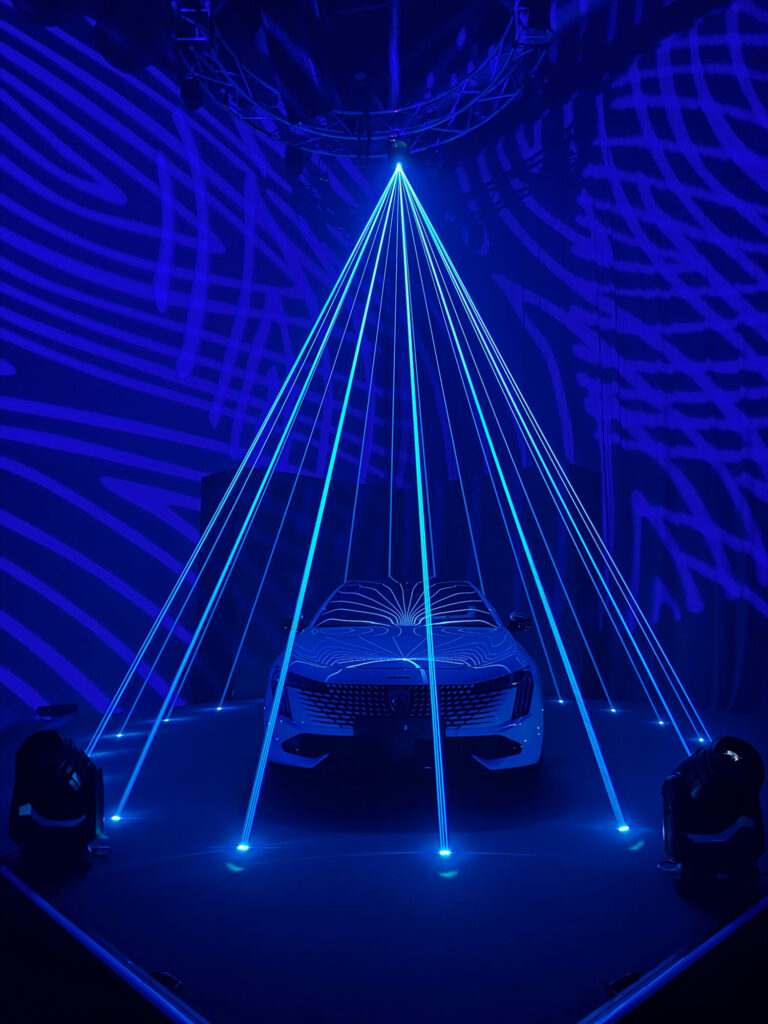
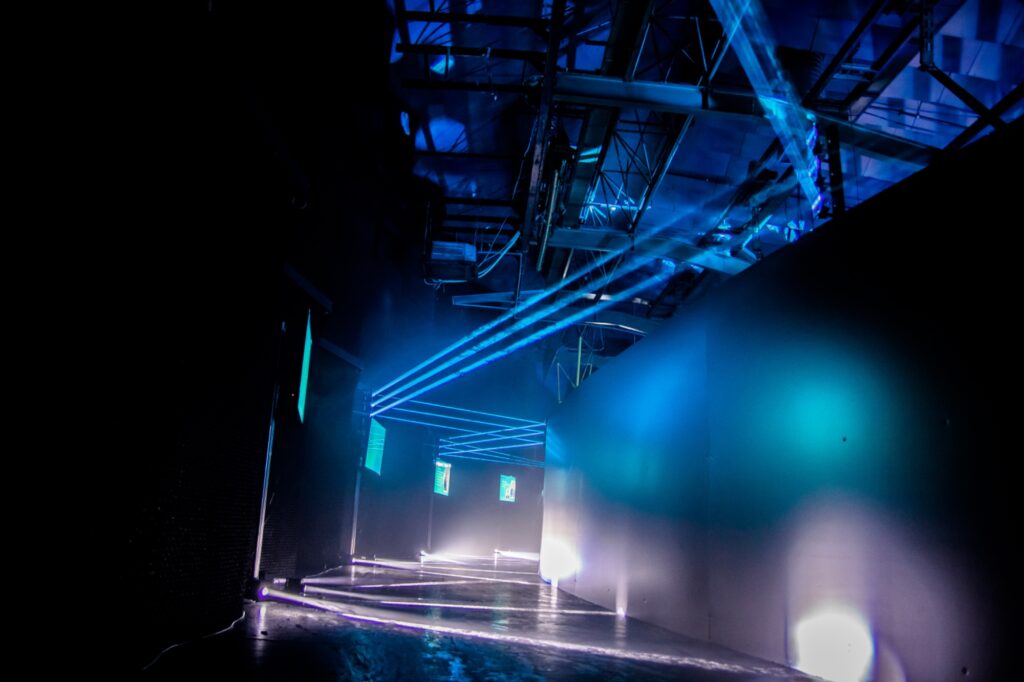
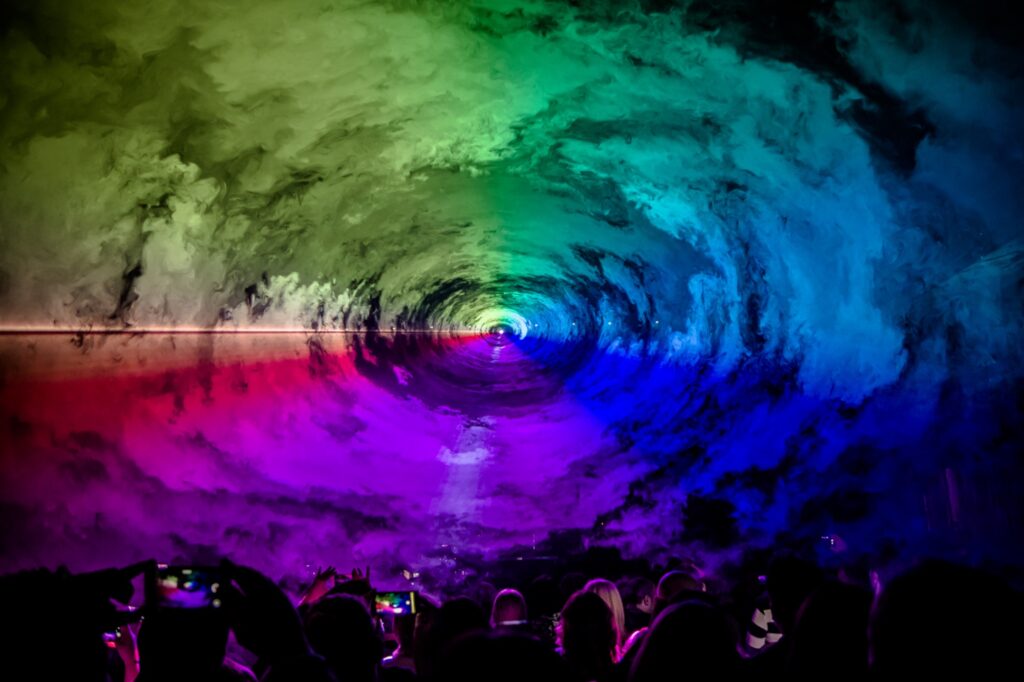
Small optical mirrors are placed at predetermined points to redirect beams through the space. This creates tunnels, intersections and luminous labyrinths that can occupy the entire architecture.
Every reflection is treated as a new beam source: its continuation, safe termination and any possibility of mirror movement are assessed. A mirror show may look free, but its geometry is highly disciplined.
It looks mysterious because it is precisely engineered.
How much haze do lasers really need?
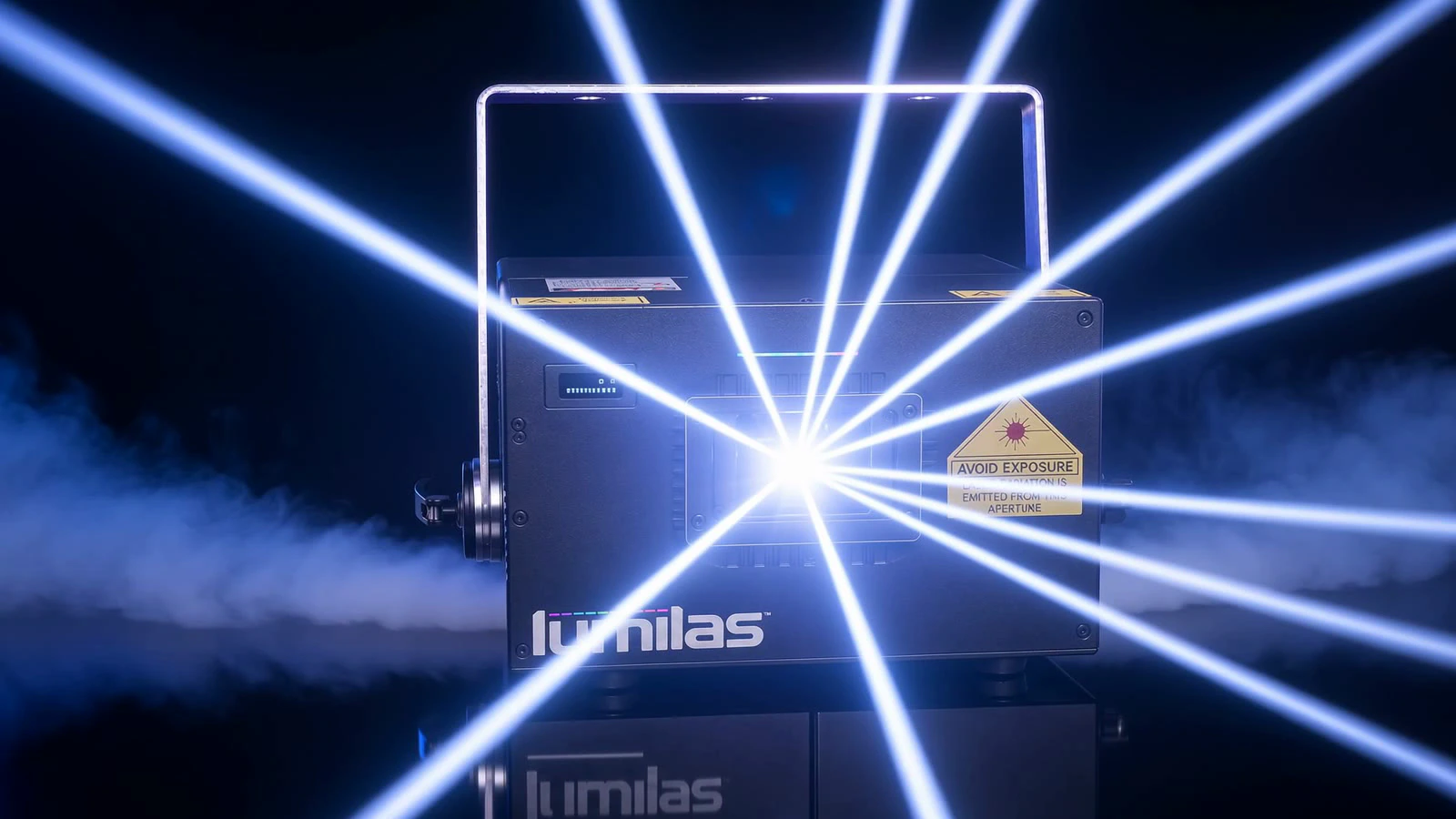
We see a beam because some of its light scatters from tiny particles in the air. A light, even haze works best: enough to give beams volume, but not so dense that the room looks smoky or photography loses contrast.
Ventilation, air conditioning and open doors can completely change haze distribution. We tune levels during rehearsal and coordinate them with the venue, fire detection and the rest of production.
We do not need a cloud of smoke — we need controlled atmosphere.
Is more wattage always a better laser?
No. Power matters, but beam divergence and profile, optical quality, scanner speed, colour balance, mechanical stability and projector safety functions matter just as much.
An overpowered projector in the wrong position can produce a worse and less safe image than a properly selected system. We design around what a beam must do at a given distance, not the number that looks best in a catalogue.
Beam quality and system design matter more than power alone.
Why does laser graphics look different from video?
Video builds an image from a complete pixel grid. A laser moves one very bright point so quickly that the eye perceives a continuous line. That is why laser graphics naturally favour clean contours, rhythm and motion.
Too much fine detail slows the drawing and can introduce flicker. A good laser animator does not copy a video frame; they translate it into an economical language of light strokes.
A laser does not fill the frame — it draws it with light.
Do lasers work outdoors and over water?
Yes, but outdoor sites add variables: wind disperses haze, moisture affects equipment and skyward beams may be relevant to aviation. Every beam path is therefore planned with the location and any required approvals in mind.
Water can be an excellent projection surface or part of the atmosphere, but angles, reflections and weather conditions must be controlled. The spectacle remains; the technical preparation becomes more detailed.
An outdoor laser show is designed around the site, weather and airspace above it.